
Celebrated in Brazil on April 19th, Indigenous Peoples’ Day is an invitation to recognize the diversity, history and above all, the fundamental role these peoples play in biodiversity conservation.
Indigenous peoples are the original inhabitants of different regions of the planet, with their own forms of social organization, languages, cultures, and ways of life deeply connected to their territories. Over generations, they have accumulated knowledge about natural cycles, resource management, and balanced coexistence with the environment. This knowledge guides practices that directly contribute to the preservation of forests, rivers, and natural landscapes, positioning these populations as key actors in biodiversity conservation.
Globally, Indigenous peoples number more than 476 million individuals across approximately 90 countries according to UN data. Together, these populations occupy about a quarter of the planet’s land and are associated with the protection of around 80% of the world’s biodiversity.
In Brazil, this diversity is reflected in nearly 400 Indigenous ethnic groups and around 290 different languages according to the 2022 Demographic Census. Recognized Indigenous Lands account for about 14% of Brazilian territory, totaling more than 110 million hectares with a strong concentration in the Amazon, where they play an essential role in forest protection.
Studies by MapBiomas (2022) show that these territories act as barriers against deforestation. Over the past three decades, Indigenous Lands have lost about 1% of their native vegetation, while in private areas the loss has reached 20.6%. This data reinforces the direct connection between Indigenous presence and ecosystem conservation.
Despite this relevance, Indigenous peoples face constant challenges, such as agricultural expansion, advancing deforestation, illegal mining, land conflicts, and the impacts of climate change. These pressures threaten not only their territories but also their ways of life and traditional knowledge.
Indigenous peoples and conservation in the Pantanal
In the Pantanal, Indigenous presence is directly linked to how the biome is understood and lived. The region is home to around 10 Indigenous groups, including Guató, Terena, Kadiwéu, Kinikinau, Ofaié, and Bororo, mainly distributed between Mato Grosso and Mato Grosso do Sul. Even occupying a smaller area compared to in the Amazon, these peoples maintain a deep relationship with the landscape based on an understanding of the natural cycles that shape the biome.

Image credits: Julia Santos
The flood and drought regime, which completely transforms the Pantanal throughout the year, is a central part of this knowledge. Adaptation to these cycles, fire management, and the balanced use of natural resources are practices that directly contribute to maintaining biodiversity. However, this balance has been under pressure from agricultural expansion, land-use changes, and the increase in extreme events, such as wildfires that in 2024 alone affected around 2.6 million hectares of the biome.
Onçafari’s work with Indigenous communities
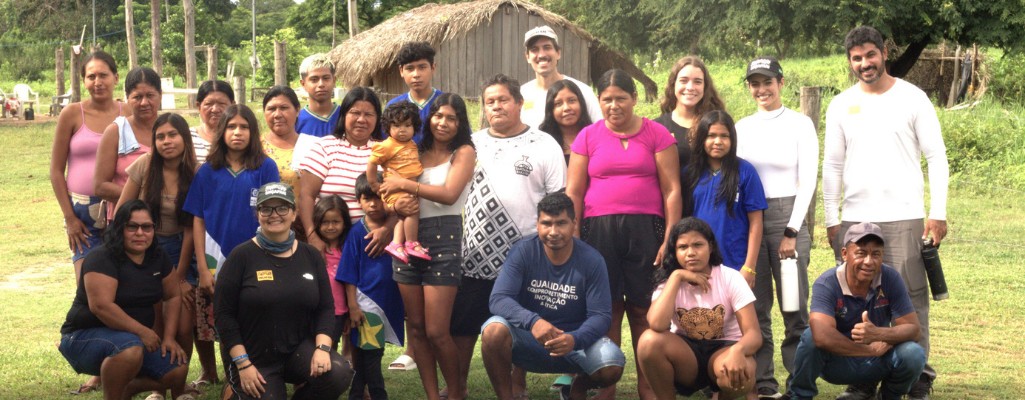
It is within this context that Onçafari develops integrated conservation initiatives, recognizing the central role of Indigenous communities in protecting ecosystems. One example is the project Pemega Perigara? begun in 2022 in partnership with the Boe Bororo people and the Itura Kurireu Association (AIK) in the Perigara Indigenous Land.
The partnership is based on strengthening the community’s autonomy in managing its territory, recognizing that conservation is directly linked to the ability of local populations to protect and manage their own lands.

Image credits: Stephanie Birrer
The formalization of the Itura Kurireu Association was achieved in 2024, expanding opportunities for access to resources and participation in external initiatives.
The project also promotes cultural strengthening and Indigenous leadership. One example was the II Meeting of Boe Bororo Women, which brought together more than 200 participants and strengthened spaces for exchange, coordination, and appreciation of traditional knowledge. Community representatives have also begun participating in strategic agendas, such as COP Pantanal, increasing the visibility of their causes.
In 2025, the Fire Brigade of the Perigara Indigenous Land was strengthened with the construction of a storage facility, the implementation of 30 km of firebreaks in partnership with RPPN SESC Pantanal, and the training of brigade members in drone piloting, equipment maintenance, and technical courses, including the Incident Command System (ICS 100 and ICS 200).

Image credits: EJF
The partnership with the Boe Bororo people demonstrates in practice how traditional knowledge and Indigenous territorial management are fundamental to conservation. The historical relationship with the territory combined with strengthened community autonomy directly contributes to biodiversity protection and ecosystem maintenance.
By supporting these initiatives, Onçafari highlights an essential principle: nature conservation is deeply connected to the people who live in and care for these territories. Where there is protected Indigenous land, there is also greater environmental preservation. Strengthening these communities, therefore, means strengthening biodiversity itself.