
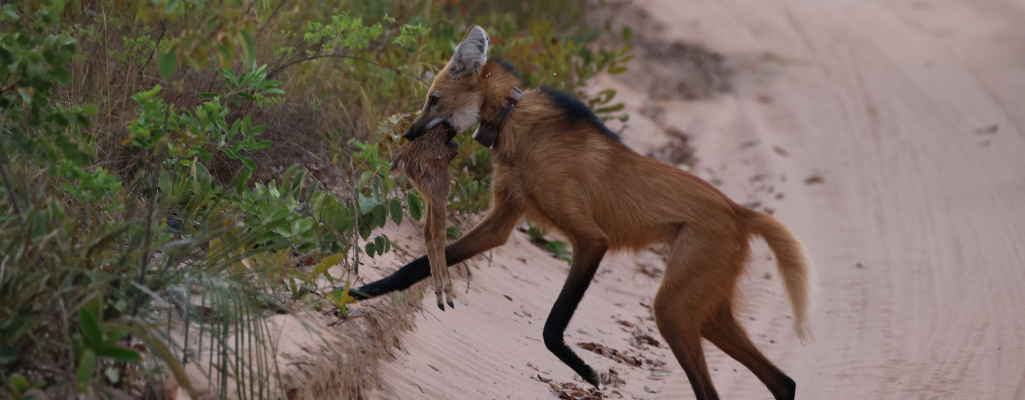
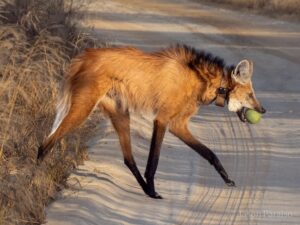
For a long time, the maned wolf was described as a generalist omnivore known mainly for its diet based on fruits, especially the wolf apple, and small vertebrates such as rodents and smaller birds. This characteristic has long helped shape the image of an animal that is more opportunistic than an active predator of large prey, capable of alternating between different food sources throughout the year. However, recent field observations have expanded this understanding and revealed new nuances about the species’ feeding behavior.

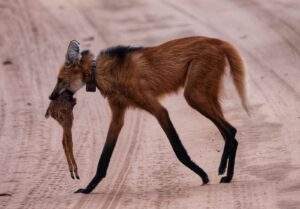
At Pousada Trijunção, during the peak of the dry season, the Onçafari’s field team began recording patterns that differed from what was expected. Savana, a female maned wolf that we have been monitoring since 2021, was observed preying on her first pampas deer fawn in September 2023. In September 2025, these events were recorded again, and by the end of that same year, Savana was observed carrying at least four pampas deer fawn carcasses on different days toward the area where her pups were possibly located.
-
- Credit: Chris Horton

-
- Credit: Jason Paraiso

Another record considered unprecedented added a new layer of complexity to this behavior. In the Cerrado, our field team documented the predation of a greater rhea in September 2022 by Buriti, a maned wolf monitored since 2021. Unlike cases of scavenging, when an animal feeds on already available carcasses, this event involves an active attack; the individual was observed killing the bird, dragging it into a depression in the ground, and beginning to feed there. Monitoring continued through camera traps installed at the site which recorded Buriti returning to the carcass at different times. The study “First record of a maned wolf preying on greater rhea” was published in the scientific journal Canid Biology & Conservation. All authors were collaborators with Onçafari and you can read more about it here.

These episodes reveal relevant aspects of the behavioral ecology of the maned wolf. Although fruits and small prey continue to form the basis of its diet, the ability to exploit larger resources under certain conditions, such as prey availability or necessity, shows that the species’ feeding behavior is more flexible and strategic than previously thought.
However, the predation of larger prey, such as deer fawns and rheas, still does not represent the dominant pattern for the species. These records reinforce the importance of long-term monitoring. In a scenario of rapid environmental change, understanding this complexity is essential to guide more effective conservation strategies.
If you’re interested in discovering up close the secrets that the Cerrado and the maned wolf hold, be sure to visit Pousada Trijunção, one of our operational bases for ecotourism.