
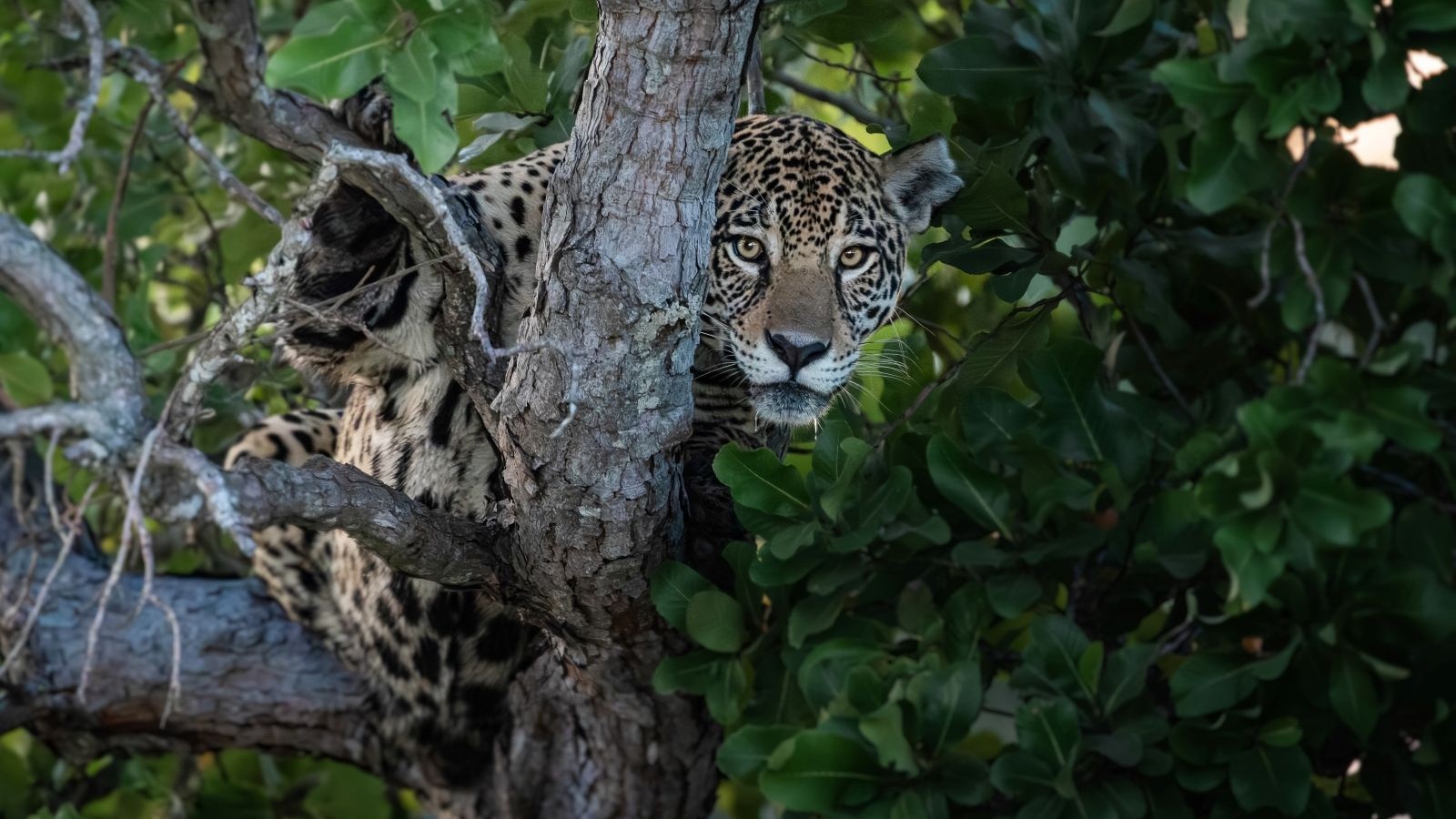
Some stories begin with a place. Others begin with an encounter. The story of Onçafari begins with both and its protagonist is one of the most emblematic animals of the Americas: the jaguar.
Today, as it approaches 15 years of its journey, Onçafari carries a narrative born from admiration for this great feline, one that has gradually expanded into something larger. Because the jaguar is more than just a symbol, it reveals an essential truth about nature; wherever it lives, an entire ecosystem is functioning.
How it all began
This story begins long before 2011. As a young man, during a family trip to Tanzania, Mario Haberfeld had his first encounter with wildlife. Observing animals roaming freely in their natural environment sparked a deep connection with nature and with the idea that conservation and tourism could go hand in hand. It was when he turned his attention back to his own country that this inspiration found new meaning.
In the Pantanal, in the region of Miranda in the state of Mato Grosso do Sul, the opportunity emerged to develop a project inspired by African safaris but adapted to Brazilian reality. The idea was simple and, at the same time, bold; to show that wildlife conservation could walk side by side with responsible tourism.
And so Onçafari was born in 2011.

The work began with ecotourism and with a challenge that had rarely been explored in Brazil previously. To make it possible to observe jaguars in the wild. To achieve this objective, the team developed a habituation process in which jaguars gradually become accustomed to the presence of safari vehicles without altering their natural behavior. The goal was never to bring people too close to the animals, but to allow visitors to respectfully witness wildlife.
“We wanted to show that a jaguar is worth more alive than dead through ecotourism. That is the reason Onçafari was created,” says Mario Haberfeld, CEO of Onçafari.
Over time, the presence of jaguars stopped being just a rare occurrence and became part of the experience for those visiting the region.
The Onçafari team also began to observe that the presence of these animals is directly linked to the health of the environments in which they live. For a jaguar to exist, there must be prey, preserved forests, functioning rivers, and landscapes capable of sustaining a complex ecological chain.
Little by little, it became clear that protecting the jaguar meant protecting an entire ecosystem.
What began with the observation of a great feline evolved into scientific research, wildlife monitoring, and conservation initiatives across different Brazilian biomes. New areas of work gradually emerged, including species reintroduction processes, the formation of wildfire brigades, and actions aimed at protecting natural landscapes.
In the beginning, the jaguar was the primary focus of Oncafari’s efforts. Today, it is also the messenger of a broader story, one in which forests, rivers, and Brazil’s biomes form the universe where everything happens. The jaguar became a symbol of the connection between fauna, flora, and people, while Onçafari’s perspective expanded to include the creation of ecological corridors capable of ensuring that biodiversity finds protected and connected areas where it can thrive.
 Photo credit: Rafael del Prete
In 2026, Onçafari celebrates 15 years dedicated to the conservation of biodiversity and Brazil’s biomes. Guided by the same idea that gave rise to the project, Onçafari continues to have the jaguar as its great ambassador, awakening curiosity, fascination, and a deeper connection with nature, while reminding us of something fundamental; conserving a species means caring for the entire system that sustains it.
Where there are jaguars, life is in balance.