
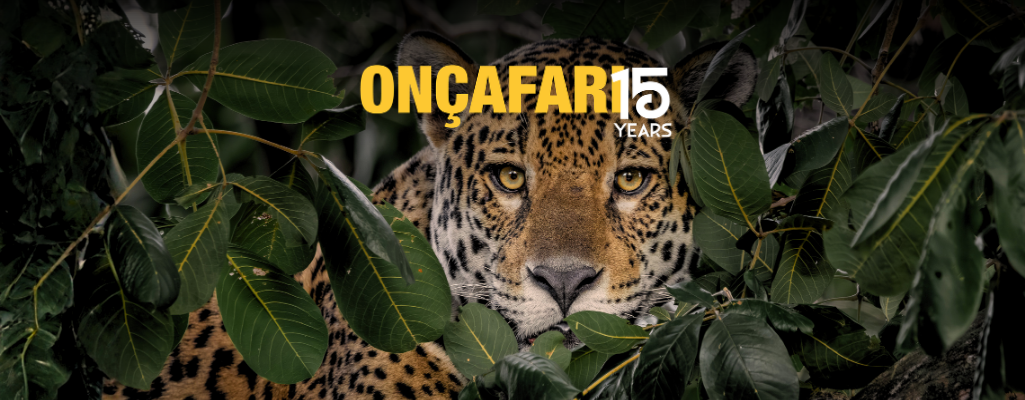
“How do you protect a species that almost no one can see?”
Fifteen years ago, that question seemed impossible to answer.
The answer began with ecotourism, which made it possible to observe wild jaguars in their natural habitat and showed us that getting to know a species is a crucial step towards protecting it.
It was from this vision and challenge that Onçafari was born. In 2011, we believed that bringing people closer to wildlife would change the way they saw the jaguar and, in turn, the natural world.

As we learned to observe jaguars, we realized they were never alone.
Over the past 15 years, we have come to understand that protecting jaguars means protecting everything that sustains them. As an apex predator, the jaguar depends on healthy forests, rivers, wetlands, and abundant prey to survive.
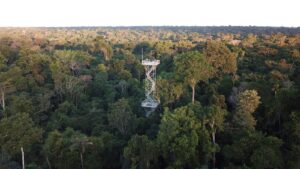
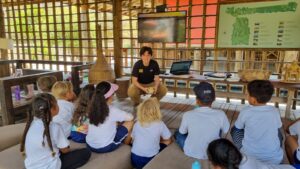
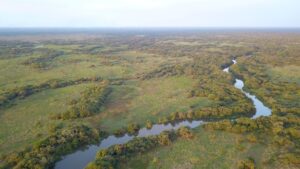
Today, Onçafari works across four Brazilian biomes, the Amazon, Cerrado, Atlantic Forest, and Pantanal. This work involves developing initiatives that combine scientific research, wildlife monitoring, environmental education, wildfire prevention and response, species reintroduction, the strengthening of protected areas, partnerships with local communities, and ecotourism as a conservation tool, all with the purpose of conserving Brazil’s biodiversity and ecosystems.
-
- Credit: Leo Sartoello

-
- Credit: Fernanda Bento

-
- Credit: Leo Sartoello

-
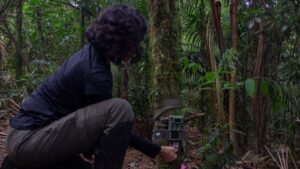
- Credit: Maria Julia Farias

Our work has grown, but our essence remains the same.
The jaguar continues to be at the heart of everything we do. As an apex predator, its presence is a sign of a healthier, more balanced ecosystem. When a landscape can support a jaguar population, countless other species also have the conditions they need to thrive.
That is why, as we celebrate our 15th anniversary, we have chosen a message that reflects everything we have learned since 2011: “Where Jaguars Roam, Life Thrives in Balance.”
This phrase captures the essence of our journey. A protected jaguar represents preserved rivers, thriving forests, functioning ecosystems, stronger communities, and a future for countless other species.

Credit: Lucas Morgado
The question has now become: How can we ensure that the landscapes where jaguars live remain connected? How can we restore degraded areas, expand ecological corridors so wildlife can move safely, and help more people understand that conserving nature is not only the responsibility of scientists or conservation organizations, but of society as a whole?
The next 15 years begin now
To celebrate this milestone, starting on Onçafari’s anniversary, August 3rd, we invite you to revisit the stories and milestones that shaped the organization we are today. Over the coming months, we will look back at our first steps and show how our work has expanded beyond the jaguar, growing into a broader mission to protect biodiversity and the ecosystems that sustain it.