
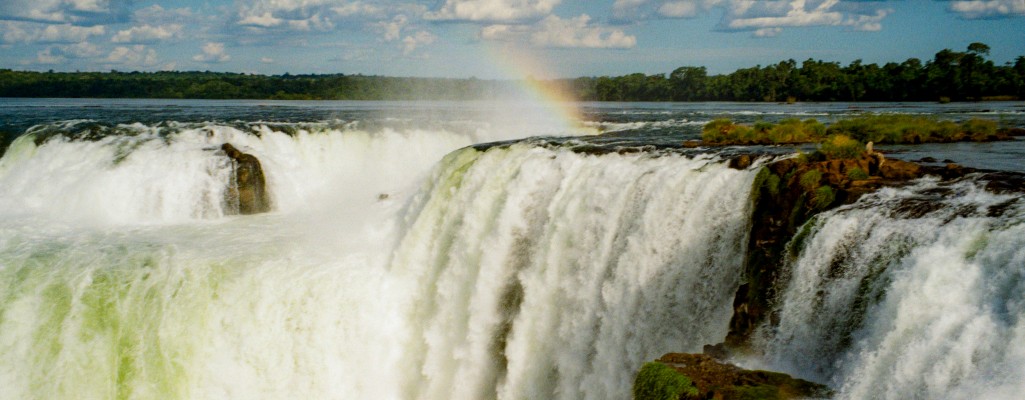
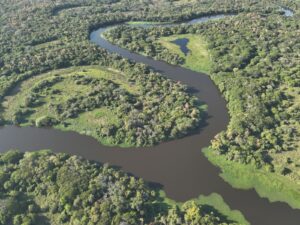
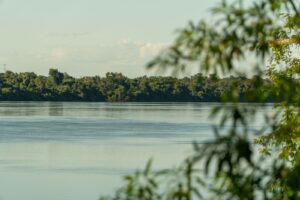
In June, Onçafari announced the acquisition of its first privately owned area in the Atlantic Forest. Located in the municipality of Capanema, Paraná along the banks of the Iguaçu River, the new 12-hectare reserve marks a significant milestone in the organization’s expansion into one of the most biodiverse and threatened biomes on the planet.
Onçafari has been working in the Atlantic Forest since 2020 through partner bases carrying out wildlife monitoring activities. The new property expands this presence, allowing direct conservation action in a strategic area for Atlantic Forest connectivity.
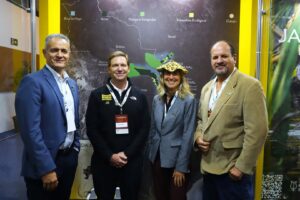
The announcement was made during the 2026 National Conference on Conservation Units for Biodiversity (UCBIO) held in Curitiba and represents an important step forward in the organization’s landscape-scale conservation strategy.
-
- Photo Credit: Onçafari Archive

-

- Photo Credit: Onçafari Archive

-
- Photo Credit: Fran Acamer

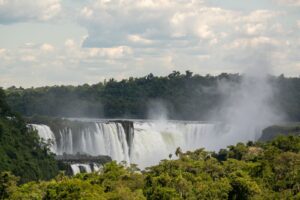
The reserve is located within the corridor linking Iguaçu National Park in Brazil and Iguazú National Park in Argentina. Together, these protected areas form a continuous transboundary Atlantic Forest landscape considered one of the last large and well-preserved remnants of this biome.
Despite the formal protection provided by these conservation units, the surrounding region has experienced significant fragmentation over the past century. Roads, agricultural expansion, and human settlements have transformed the landscape into a patchwork of isolated habitats making wildlife movement more difficult and separating wild populations.
This is why the new reserve occupies a strategic position within one of the most critical bottlenecks in the Iguaçu bi-national ecological corridor.

The initiative is directly connected to the Jaguar Rivers Initiative, an international effort led by organizations from Brazil (Onçafari), Argentina (Rewilding Argentina), Bolivia (Nativa: Natureza, Terra e Vida), and Paraguay (Fundación Moisés Bertoni) to reconnect ecosystems across the Paraná River Basin. The initiative aims to establish a continental-scale ecological corridor integrating protected areas, private reserves, rivers, and landscapes across approximately 2.5 million square kilometers.
The Jaguar Rivers Initiative is based on the understanding that conservation depends not only on creating protected areas, but also on connecting them. Within this framework, different components play complementary roles: arks, which serve as large biodiversity strongholds; integrated landscapes, the productive and inhabited areas surrounding those strongholds; ecological stepping stones, which provide intermediate habitat connections; and rivers, natural corridors that enable the flow of life across the landscape.
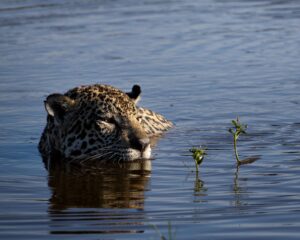
At the center of this vision is the jaguar. As an apex predator, the species serves as an indicator of ecosystem integrity and its presence supports ecological processes. Where jaguars thrive, there are functional forests, healthy prey populations, water resources, and ecological balance.
-
- Photo Credit: Carol Prange

-
- Photo Credit: Leonardo Sartorello

-
- Photo Credit: Fran Acamer

Onçafari’s Connectivity Strategy Since 2019
This landscape connectivity approach is not new to Onçafari’s work. Since 2019, through its Forests Program, the organization has been acquiring and protecting strategic areas to strengthen ecological corridors across Brazil. More than protecting individual species, the strategy seeks to maintain healthy and connected landscapes.
Today, Onçafari manages its own conservation bases in the Pantanal and the Amazon protecting more than 125,000 hectares. Together, these areas form a network of connectivity designed to establish an ecological corridor between these two biomes.
The new reserve along the Iguaçu River not only expands Onçafari’s network of conservation bases, but also furthers its connectivity-based conservation strategy. Through the Jaguar Rivers Initiative and in partnership with international organizations, this effort seeks to transcend political boundaries and reconnect landscapes across countries.
By integrating protected areas, private lands, and natural corridors, the Jaguar Rivers Initiative advances a conservation approach that views the landscape as a continuous system where different territories play complementary roles in sustaining biodiversity.